How to Trade Meme Coins Like a Full-Time Trader Without Blowing Up Your Account
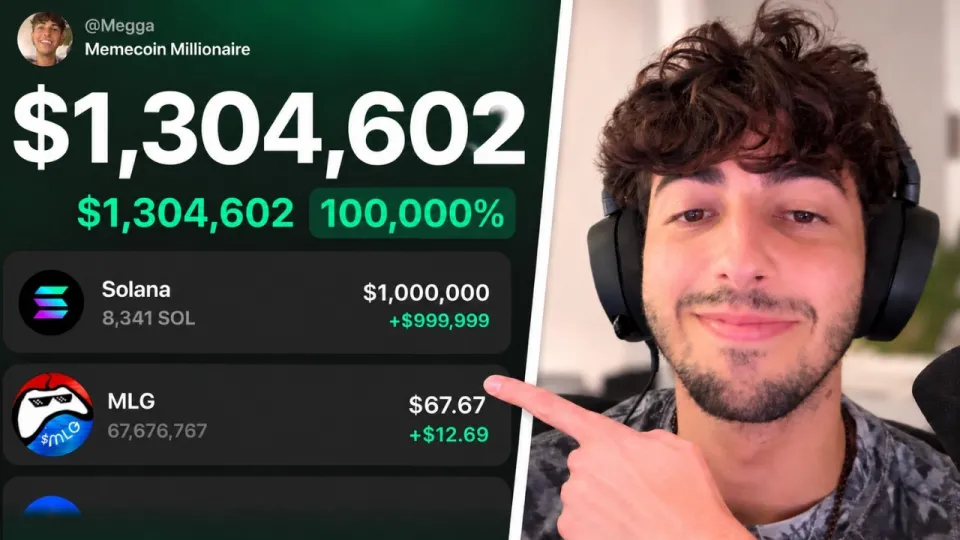
Video: How I Made $1,000,000 Trading Memecoins (FULL BREAKDOWN)
Need articles like this for your video? They help promote it on YouTube and Google — order them in the Telegram bot @sat_sit_bot. It writes articles around your video, embeds the video and publishes them on popular niche websites (no ads). Your first 50 articles are free.
· based on the channel Megga
Key takeaways
- Meme coin trading is a high-risk, fast-cycle market where most participants end up as exit liquidity for earlier buyers.
- The Megga breakdown frames a $1,000,000 result as the output of screen time, journaling, and repeated small losses rather than one lucky trade.
- Position sizing and pre-defined invalidation levels matter more than entry timing on any single token.
- A free course is offered via Whop, and the trading platform linked in the video is promoted for its low fees.
- Phishing wallet drains and post-windfall drawdowns are the two most common ways traders give back gains.
Meme coin trading is the practice of buying and selling tokens with no cash flow, no product, and no fundamentals, where price is driven almost entirely by attention and liquidity. Done as a full-time activity, it is less about finding the next 100x and more about surviving enough attempts to catch a few asymmetric winners. Megga's breakdown of a $1,000,000 result follows that logic, and the free course linked in the video description — get access to Megga's free trading course on Whop — is the entry point the creator points beginners toward.
What meme coin trading actually is and why the numbers look so extreme
A meme coin is a token whose value rests on community narrative, memes, and reflexivity rather than revenue, and that is exactly why its price chart looks nothing like a stock chart. Supply is usually concentrated in a handful of wallets at launch, liquidity is thin, and a single large seller can move the price double digits in seconds. The extreme returns people screenshot are real, but they are drawn from a distribution where the median trade loses money and a small number of trades carry the entire result.
That asymmetry is the whole business model. A trader who risks a fixed small amount per attempt and occasionally catches a token that runs can be profitable even while being wrong most of the time. The failure mode is the opposite: sizing up on conviction, averaging down on a token that is being distributed, and letting one bad position erase twenty good ones.
The workflow behind a seven-figure meme coin result
A repeatable process beats intuition, and the workflow below is the structure that separates traders who compound from traders who donate. It is not a signal service; it is the boring part that makes the exciting part possible.
- Screen for attention, not for promises. Track where volume and social mentions are accelerating before price fully reprices. A token with rising holders, rising volume, and a chart that has not yet gone vertical is a different risk profile from one already up 10x on the day.
- Check the contract before the chart. Verify that liquidity is locked or burned, that the deployer wallet does not hold a large share, and that trading is not gated by a mutable tax. On Solana and EVM chains alike, a quick holder-distribution check filters out most rugs.
- Define invalidation before entry. Decide the price or the on-chain condition at which the thesis is dead, and size the position so that hitting that level costs a fixed, acceptable percentage of the account.
- Scale out on the way up. Selling a portion into strength converts paper gains into realized PnL and removes the emotional pressure that leads to holding a round trip back to zero.
- Journal every trade. Record the entry thesis, the exit, and the reason. Over a few hundred trades, the journal shows which setups actually pay and which ones only feel good.
Megga's own framing in the video is that the hours matter more than the highlight reel, and the viewer comments echo it: people ask what exactly fills a nine-to-twelve-hour trading day. The honest answer is that most of those hours are research, monitoring, and waiting, not clicking buy.
Position sizing and risk rules that keep you in the game
Risk control is the only part of meme coin trading that is fully under your control, and it is what determines whether a bad week is survivable. A practical framework:
- Cap any single new token at 1–3% of the trading stack. If the token goes to zero, the account is intact.
- Keep a stablecoin reserve. Illiquid markets punish traders who are always fully deployed, because the best opportunities appear when others are forced to sell.
- Never add to a losing position on a token whose holder count is falling. That is not a dip; it is distribution.
- Set a daily loss limit in advance. Two or three stopped-out attempts in a row is a signal to close the laptop, not to double the next size.
- Treat leverage and borrowed capital as off-limits in this asset class. The volatility already provides the leverage.
The platform linked in the video, Padre trading terminal, is promoted on the basis of low fees — which matters more than most beginners realize, because a trader taking dozens of positions a week pays the fee stack many times over.
The mental side: drawdowns, isolation, and giving back gains
The psychological load of meme coin trading is heavier than the technical load, and almost every experienced trader has a story about a large win followed by a larger loss. Common patterns worth naming:
- The post-windfall slide. After a big hit, size creeps up because the market "owes" another one. The account usually gives back a chunk of the gain before discipline returns.
- Isolation. Trading alone in a chat window with no peers makes it hard to calibrate whether your read is reasonable. Communities, streams, and voice chats exist precisely to shorten that feedback loop.
- Security complacency. Wallet drains from phishing links and malicious signature requests are a leading cause of losses that have nothing to do with market direction. Use a dedicated trading wallet, never sign blind, and keep the bulk of capital in cold storage.
- Time scarcity. Traders with full-time jobs cannot watch charts all day, and that is fine — it just means the strategy has to be slower, with fewer and better-researched positions rather than scalp entries.
A drawdown is information, not a verdict. The traders who last are the ones who reduce size, return to their written rules, and rebuild from smaller stakes.
Common questions traders ask before starting
Beginners typically want to know three things: how much capital is enough, how to tell a real narrative from a manufactured one, and how to enter early without being the exit liquidity.
On capital: there is no universal threshold, but the practical constraint is that fees and slippage eat small accounts alive. Trading with an amount where a 50% drawdown does not change your life is the minimum viable condition.
On narratives: the difference between a durable meme and a flash in the pan is usually whether the community keeps producing content and holding through the first pullback. Tokens that survive a 60–70% retrace and reclaim interest are a different animal from those that die on the first red candle.
On entry timing: entering before the crowd means accepting that most early entries will be wrong. The edge is not in being early every time; it is in being early cheaply and often enough.
Useful links
- Megga's free trading course on Whop
- Padre trading terminal — low-fee platform
- Megga on Twitch
- Megga on TikTok
- Megga on X
Final thoughts
Meme coin trading rewards process, patience, and risk discipline far more than it rewards prediction, and the million-dollar result in Megga's breakdown is best read as an outcome of repetition rather than a template to copy trade. The realistic takeaway is a smaller, slower version of the same loop: research the token, size it so a zero does not hurt, take profits into strength, and write down what happened. Anyone starting out can work through the fundamentals with Megga's free course before risking real capital. The channel Megga is the author of this breakdown, and the video is worth watching for the tone as much as the tactics — the losses are discussed as openly as the wins.
Source: How I Made $1,000,000 Trading Memecoins (FULL BREAKDOWN) · Markdown version
Questions & answers
How much capital do I need to start trading meme coins?
There is no fixed minimum, but the practical constraint is fees and slippage: very small accounts get eaten by transaction costs before any edge shows up. A sensible rule is to trade only an amount where a 50% drawdown would not change your life, and to keep a stablecoin reserve for better opportunities.
How do I avoid becoming exit liquidity for early buyers?
Check holder distribution, liquidity lock status, and whether the deployer still controls a large share before entering. Size positions so a total loss is acceptable, and sell portions into strength instead of waiting for a target that may never come.
Is it possible to trade meme coins with a full-time job?
Yes, but the strategy has to change: fewer positions, longer research, and pre-set alerts instead of constant screen watching. Traders with limited time generally do better focusing on a handful of well-researched narratives rather than trying to scalp every new launch.
What is the biggest risk that is not about price?
Wallet security. Phishing links and malicious signature requests drain funds regardless of market direction, so use a dedicated trading wallet, never sign transactions you do not understand, and keep long-term holdings in cold storage.