Binary options brokers compared so you can pick a regulated platform and avoid the payout traps
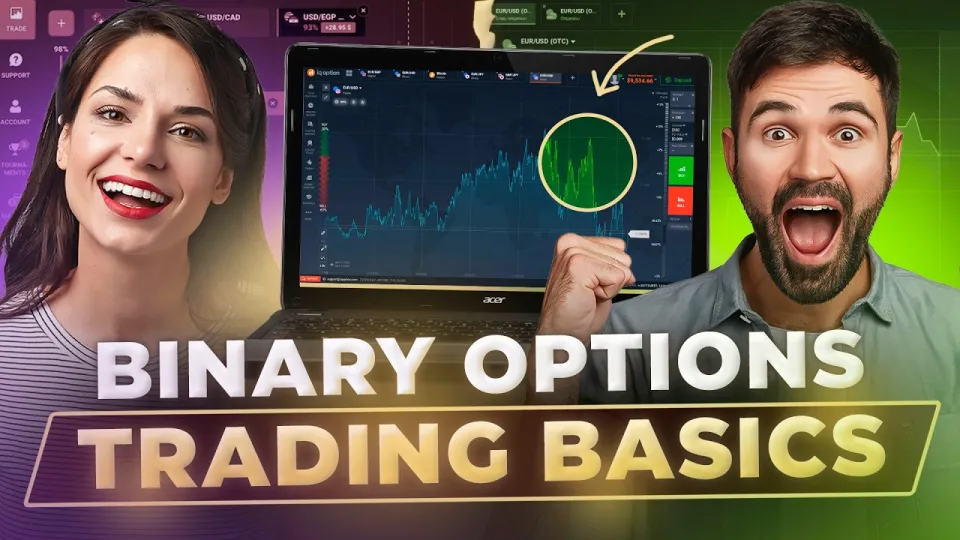
Video: Binary Options for Beginners | Binary Options Brokers | Who Can You Trust?
· based on the channel Binary options brokers
Key takeaways
- Binary options pay a fixed payout (typically 60–95%) if the price finishes on the correct side of the strike at expiry; a losing trade returns nothing.
- Quotex, Pocket Option and Binarium are the three brokers featured in the Binary options brokers channel breakdown.
- A legitimate platform offers a free demo account, published payout percentages and withdrawal terms before you deposit.
- Regulation status is the first filter: many binary brokers are registered offshore and offer no investor compensation scheme.
- Short expiries of 30–60 seconds behave like gambling, not trading; most beginners lose their balance within weeks.
Binary options brokers are the platforms where you buy a contract that pays a fixed amount if an asset's price is above or below a chosen strike price at expiry, and loses the stake if it is not. Choosing one comes down to three checks: is it regulated or at least transparent about its legal entity, does it publish payouts and withdrawal rules, and does it let you test the interface on a free demo before you fund it. The three names most often shown to beginners — Quotex, Pocket Option and Binarium — are a starting point, not a guarantee; you can compare their registration terms via the Quotex sign-up page and treat every platform on the list with the same due diligence.
How binary options brokers actually make money
The broker's revenue model is the opposite of a stockbroker's commission, and understanding it explains most of what you see on the platform. You pay a stake, say $10, and if the trade wins you receive the stake back plus a payout — commonly quoted between 60% and 95%, so $16 to $19.50 on a $10 stake. If the trade loses, the full $10 is gone. That asymmetry means a trader needs a win rate above roughly 53–55% at an 85% payout just to break even, before any fees.
Most platforms are market makers: they take the other side of your trade or route it to a liquidity provider, and they profit when client losses exceed client wins. That is not automatically dishonest, but it means payout percentages, expiry rules and execution speed are commercial decisions, not neutral market data. A few platforms add a percentage refund on losing trades, which changes the maths slightly but never removes the edge requirement.
What separates a usable platform from a trap
A usable binary options broker answers five questions before you deposit a cent. First, who is the legal entity and where is it licensed — an offshore registration with no regulator behind it gives you no recourse if withdrawals stall. Second, are payout percentages published per asset and per expiry rather than promised as a flat rate. Third, what is the minimum deposit and the minimum trade size, since a $10 minimum with a $1 trade is very different from a $250 minimum. Fourth, how do withdrawals work: method, processing time, fees and any verification requirements. Fifth, is there a demo account with realistic pricing that does not expire in an hour.
Red flags are consistent across the industry: bonuses that lock your funds until you trade a large volume, account managers who call and push bigger deposits, withdrawal requests that suddenly require extra documents after you profit, and platforms whose only presence is an affiliate landing page.
Quotex, Pocket Option and Binarium in plain terms
These are the three platforms the Binary options brokers channel puts in front of beginners, and each has a different profile. Quotex is a web-based platform with a low minimum deposit, a demo mode and a simple interface aimed at people who have never traded; it is popular in emerging markets and offers short expiries alongside longer ones. Pocket Option is known for a social trading feed where users share trades, a wide asset list including crypto and OTC pairs, and a mobile app. Binarium is a longer-running brand that leans on classic binary contracts with fixed expiries and a more traditional charting layout.
All three share the same structural caveats: they operate under offshore entities rather than tier-one regulators, and their profitability depends on client outcomes. None of them should be treated as a savings account or a place to park money you cannot afford to lose.
The beginner mistakes that cost the most
The fastest way to lose a balance is to trade 30-second and 60-second expiries, where the outcome is close to a coin flip and the payout edge does the rest. Short expiries feel like trading because a chart moves, but there is no time for an analysis to play out.
Other recurring errors, in rough order of damage:
- Martingale doubling after every loss — a run of five losses at $1 escalates to $32 on the sixth trade.
- Risking 10–20% of the balance per trade instead of 1–2%.
- Trading during news releases on OTC pairs where spreads and requotes widen.
- Accepting a deposit bonus that makes the balance look larger while locking withdrawals.
- Skipping the demo account and learning the platform's order types with real money.
A workable beginner routine is to pick one asset, one expiry length of at least five minutes, and a fixed stake of 1% of the balance, then log 50 demo trades and calculate the actual win rate before going live.
Typical questions beginners ask before depositing
The doubts that come up most often are about trust and about withdrawals, and they are the right doubts to have. Beginners want to know whether a platform will pay out, whether a demo account is really free, and whether a $10 deposit is enough to learn anything. The honest answers: payouts depend on the entity's reputation and your own verification compliance, the demo is free but its pricing is simulated, and $10 is enough to learn the interface but not enough to judge profitability.
A second cluster of questions is about strategy — whether signals groups are worth paying for, whether a bot can trade for you, and whether one indicator is enough. Signals sold by affiliates usually come from the same affiliate pipeline that earns from your deposits, and automated bots on binary platforms mostly reproduce the martingale problem at speed.
All platforms and tools mentioned
- Quotex registration: https://dakaklik.com/_quotex?creative_id=GZGkCx8QyQQ
- Pocket Option: https://dakaklik.com/_PocketOption?creative_id=GZGkCx8QyQQ
- Binarium: https://dakaklik.com/_Binarium?creative_id=GZGkCx8QyQQ
- NordVPN (used for account security and access): https://dakatop.link/Nord_us?creative_id=GZGkCx8QyQQ
Affiliate links do not change the platform's terms, and none of these tools removes the risk of loss.
Final take
Binary options brokers are not interchangeable, and the difference is rarely in the chart colours — it is in the legal entity, the payout table and the withdrawal process. Test any platform on demo first, keep stakes at 1–2% of your balance, avoid expiries under five minutes, and refuse bonuses that lock your capital. The Binary options brokers channel walks through Quotex, Pocket Option and Binarium for beginners and is worth watching alongside this guide. If you want to start with the platform covered first, use the Quotex registration link and open a demo account before funding anything.
Source: Binary Options for Beginners | Binary Options Brokers | Who Can You Trust? · Markdown version
Questions & answers
Are binary options brokers legal and safe to use?
Legality depends on your jurisdiction: binary options are banned for retail clients in the EU and UK, while many offshore platforms still accept traders from other regions. Safety depends on the entity behind the platform — check for a licence, published withdrawal terms and independent user reports before depositing. No binary broker offers deposit insurance comparable to a regulated brokerage.
How much money do I need to start with a binary options broker?
Many platforms, including Quotex, allow a minimum deposit of around $10 and trades from $1, so the barrier to entry is low. That is also the trap: a small balance with 30-second expiries disappears quickly. A more sensible starting point is an amount you can lose entirely, traded at 1–2% per position after a demo phase.
Do I need a demo account before trading live?
Yes, and it should be used for at least 50 trades so you can calculate a real win rate rather than guess it. Demo pricing is simulated, so it will not perfectly match live execution, but it teaches the order types, expiry mechanics and platform layout without risking money. Going live first is how most beginners lose their deposit in a week.
Are paid signal groups and trading bots worth it?
Rarely. Most signal sellers are affiliates who earn from your deposits, and their track record is usually unverifiable. Bots on binary platforms typically scale stakes after losses, which reproduces the martingale problem at speed. Learning one asset and one expiry length yourself is cheaper and more durable than buying signals.